
Everyday Bag Organisation – Why It Matters More
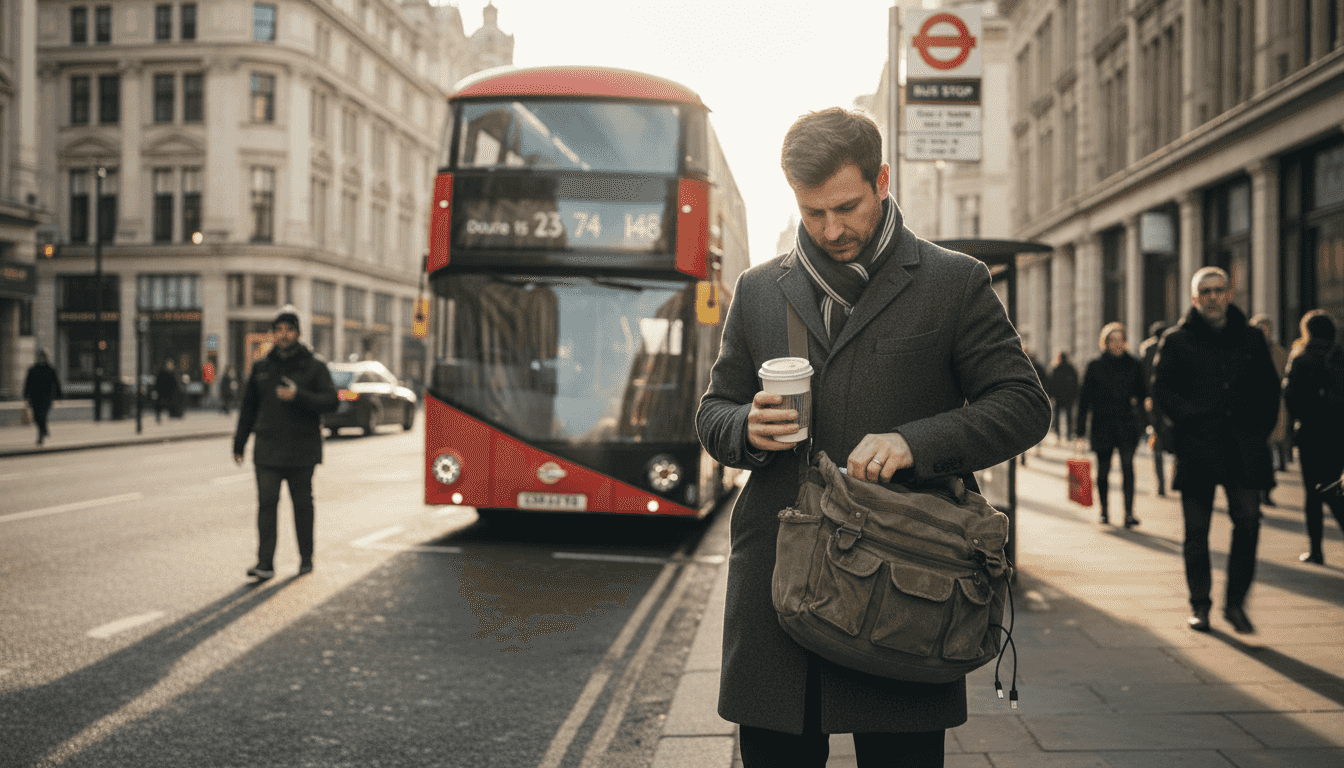
Rushing for the train in Central London only to waste precious minutes searching for your keys is far too common. Bag organisation shapes not just your efficiency, but also your daily comfort and sense of style. For professionals trying to balance durability, sustainability, and practical design, understanding the choreography of objects in your bag is a gamechanger. This guide highlights how a well-organised bag supports your lifestyle, elevates functionality, and reinforces your personal aesthetic.
Table of Contents
- Defining Organisation In Everyday Bags
- Types Of Everyday Bags And Their Uses
- Practical Methods To Organise Your Bag
- Risks Of Disorganisation And Key Mistakes
- Comparing Bag Features For Daily Needs
Key Takeaways
| Point | Details |
|---|---|
| Effective Bag Organisation | A well-organised bag creates a functional system allowing easy access to essentials, reducing stress during busy days. |
| Importance of Compartmentalisation | Dividing space into dedicated zones for different items enhances accessibility and efficiency in everyday use. |
| Choosing the Right Bag Type | Selecting a bag that aligns with daily realities and lifestyle needs ensures practicality without compromising on style. |
| Regular Maintenance | Implementing a weekly reset to audit contents helps maintain organisation and prevents clutter over time. |
Defining Organisation In Everyday Bags
Bag organisation isn’t just about cramming everything inside and hoping you find your keys. It’s a deliberate approach to how your daily carry functions, both practically and aesthetically.
At its core, organisation means creating a system where items serve your lifestyle. Your bag should work for you, not against you. Whether you’re rushing through London’s commute or heading to a client meeting, a well-organised bag saves time, reduces stress, and protects your belongings.
What Makes a Bag Truly Organised?
Organisation involves several key elements:
- Compartmentalisation – dividing space into dedicated zones for different item types
- Material durability – choosing fabrics that withstand daily wear and frequent access
- Accessibility – ensuring frequently used items are easy to reach without unpacking everything
- Adaptability – designing flexible storage that adjusts to changing needs
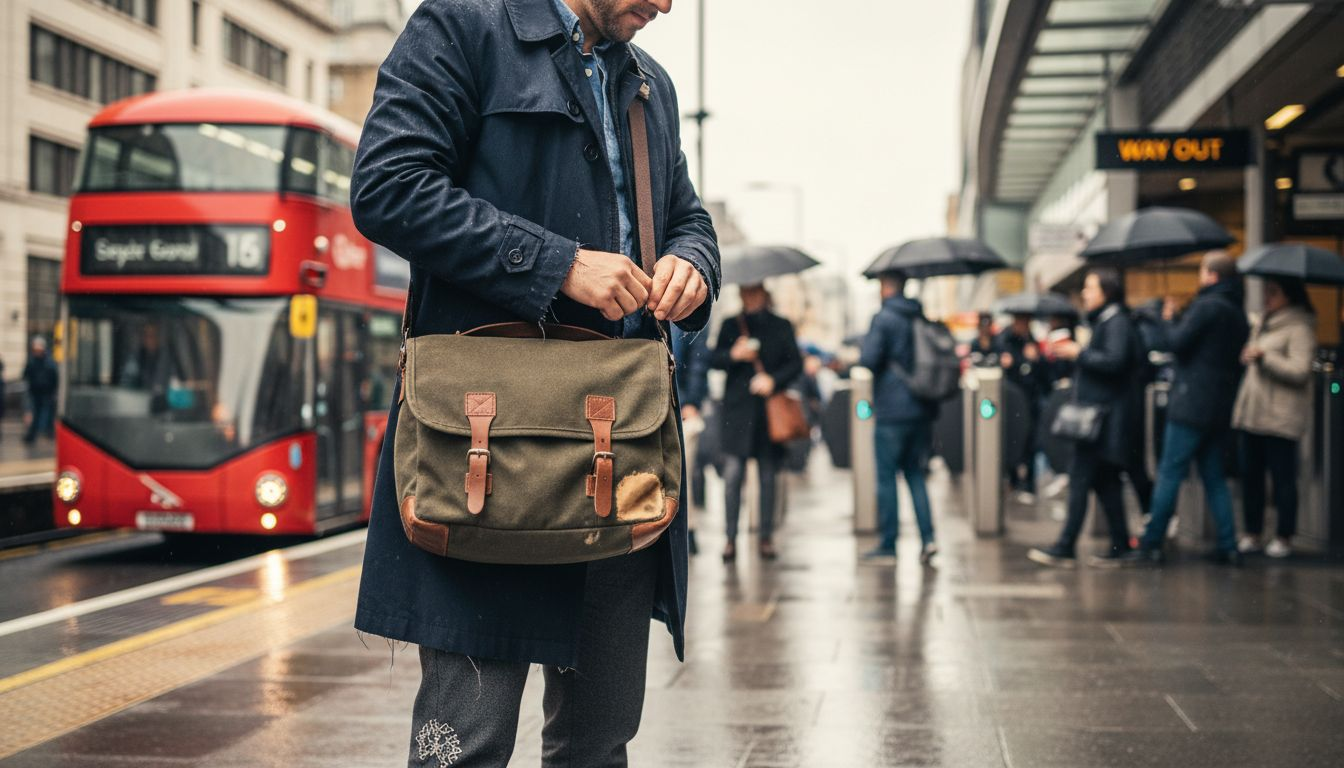
Bags function as both practical containers and reflections of personal style. Your bag communicates something about how you move through the world. An organised canvas messenger bag, for instance, signals professionalism whilst maintaining that effortless London aesthetic.
Organisation in everyday bags is the choreography of objects within confined space – how everything moves and interacts to enable your day.
This isn’t static. Think of how objects interact within your bag as a dynamic process. Your commute, your meetings, your social plans – they all demand different arrangements. A truly organised bag adapts to these shifts without losing functionality.
When you invest in a quality canvas bag with proper compartmentalisation, you’re not just buying storage. You’re creating an ecosystem for your daily life. Leather trim, reinforced stitching, and thoughtful pocket placement aren’t luxuries – they’re practical considerations that make organisation work.
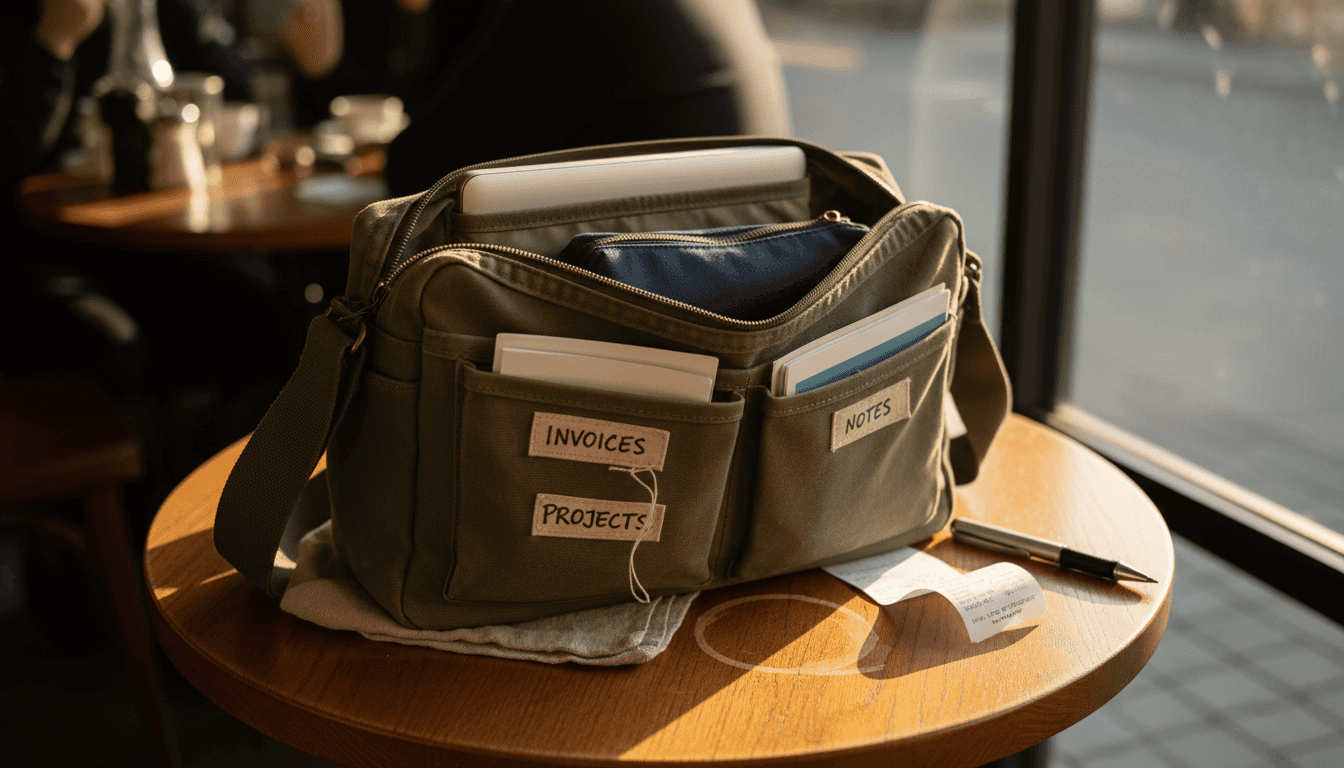
Many professionals struggle with finding the right system. That’s where understanding bag choreographies and material construction becomes valuable. A well-made bag with purposeful compartments removes the guesswork.
Looking for practical approaches? Consider useful tips on organising your messenger bag, which breaks down specific strategies for professionals managing multiple daily commitments.
Pro tip: Map out what you actually carry daily, then choose a bag with compartments matching those items – don’t force your routine into a bag designed for someone else’s lifestyle.
To illustrate how core features align with different professional routines, see the table below:
| Feature Priority | Commuting Professional | Mobile Consultant | Flexible Creative |
|---|---|---|---|
| Compartmentalisation | Multiple pockets for categories | Dedicated document/laptop zone | Adaptable main compartment |
| Material Durability | Water-resistant canvas or nylon | Reinforced corners/stitching | Lightweight yet sturdy canvas |
| Accessibility | Quick-access for travel card/keys | Exterior tablet pocket | Spacious for sketchbooks |
| Adaptability | Expandable sides for shopping | Removable organiser insert | Convertible strap system |
Types Of Everyday Bags And Their Uses
Not all bags are created equal. Your choice of bag type fundamentally changes how you carry your life through London’s streets, from your commute to client meetings to weekend social plans.
Each bag type serves a distinct purpose, shaped by the activities it supports and the items you need to carry. Understanding these differences helps you choose wisely rather than ending up with an expensive accessory that doesn’t fit your actual routine.
The Main Everyday Bag Categories
Different bag types address different lifestyle demands:
- Crossbody bags – lightweight, hands-free, ideal for commuting and urban exploring
- Messenger bags – structured, professional, perfect for laptops and documents
- Backpacks – balanced weight distribution, excellent for longer days out
- Tote bags – spacious, versatile, suited for shopping and flexible carrying
- Shoulder bags – classic, accessible, great for daily essentials
Your specific choice depends on three things: what you carry, how long you carry it, and the impression you want to make. A canvas messenger bag screams professionalism and durability. A crossbody bag signals mobility and practicality.
Different bag types use materials based on function – canvas and nylon for everyday wear, leather for sophisticated polish, high-performance fabrics for demanding use. A young professional commuting daily needs something water-resistant and durable. A weekend bag can prioritise style over robustness.
Choose your bag type by matching it to your daily reality, not your aspirational self.
Messenger bags remain the gold standard for professionals. They offer proper laptop compartments, quick-access pockets for your phone and keys, and a silhouette that works in both casual and formal settings. The 7 essential bag types for men of style and culture covers how different bag styles communicate professionalism.
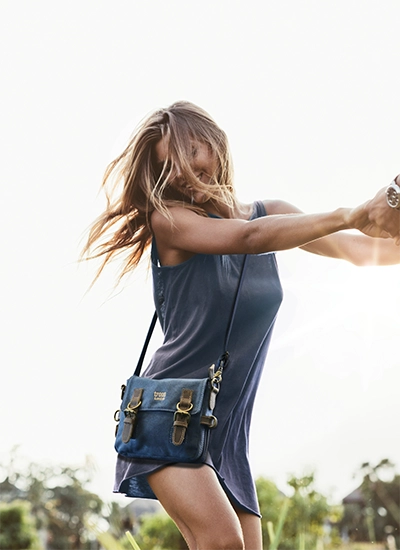
Crossbody bags excel for commuters. They distribute weight evenly and keep your hands free for boarding the tube or grabbing your coffee. They’re also theft-resistant on busy transport, which matters when you’re navigating central London daily.
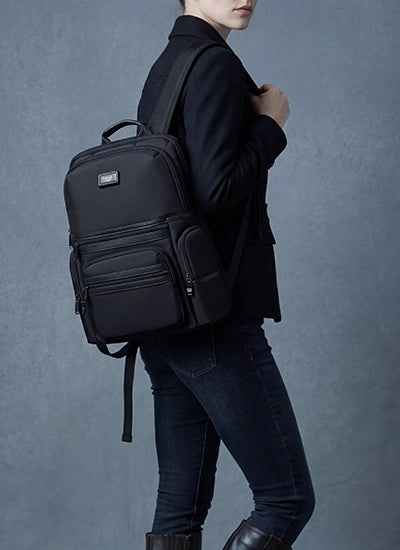
Backpacks suit longer workdays. If you’re moving between offices, spending hours at a client site, or travelling across the city, a quality backpack protects your back and keeps items secure. Canvas construction paired with reinforced straps handles consistent, heavy use.
Tote bags offer flexibility. Whether you’re grabbing groceries or heading to the office, a structured tote adapts. They’re less formal than messenger bags but more intentional than throwing things in any old bag.
Pro tip: Audit your actual daily movement – count how many trips you make between locations and what weight you’re carrying – then select a bag type engineered for that reality, not an imagined version of your life.
Below is a comparison of everyday bag types to help with selection:
| Bag Type | Ideal Use Case | Standout Benefit | Potential Drawback |
|---|---|---|---|
| Messenger | Professional daily carry | Secure laptop/document fit | Can become heavy on one side |
| Crossbody | Urban commute | Hands-free, anti-theft | Limited capacity |
| Backpack | Long, active days | Even weight distribution | Less formal for some settings |
| Tote | Shopping & work blend | Spacious and versatile | Minimal interior organisation |
| Shoulder | Quick errands | Easy to reach essentials | Less ergonomic for heavy loads |
Practical Methods To Organise Your Bag
Knowing you need organisation and actually doing it are two different things. Here’s how to move from chaos to a system that genuinely works with your daily rhythm.
The key is building habits, not perfection. A well-organised bag saves you time, reduces stress, and keeps your belongings protected. More importantly, it means you find what you need instantly rather than digging through everything during your commute.
The Step-By-Step Approach
Start with these practical methods:
- Empty completely – tip everything out and assess what you actually carry daily
- Categorise items – group similar things together (work essentials, personal care, daily necessities)
- Assign zones – designate specific compartments for each category
- Use smaller pouches – keep related items together in small organisers or zip bags
- Keep critical items accessible – medication, keys, and essential documents belong in easy-reach pockets
This systematic approach prevents clutter. When everything has a place, you maintain organisation naturally rather than constantly fighting disorder.
Zone Your Compartments
Most quality bags already include multiple compartments. Use them intentionally rather than randomly:
- Main compartment – larger items like documents, tablet, or a book
- Front pocket – daily necessities: keys, phone, travel card, wallet
- Side pockets – water bottle, umbrella, or quick-grab items
- Interior zip pocket – valuables and sensitive documents
Categorising contents using compartments minimises retrieval time and prevents items shifting around. When you establish these zones consistently, muscle memory takes over. You automatically place things where they belong.
A well-organised bag isn’t about having fewer possessions—it’s about knowing exactly where everything is.
Small pouches become your secret weapon. Use a slim wash bag for personal items, a pencil case for tech accessories, and a card holder for documents. These prevent small items from disappearing into the abyss of your bag’s main compartment.
Rotate seasonally. Your winter bag contents differ from summer. What you carry in January doesn’t match July. Review your system quarterly and adjust accordingly.
The Weekly Reset
Spend five minutes weekly reviewing what’s actually in your bag. Remove items you’re not using. Return items that migrated elsewhere. This prevents your organised system from gradually deteriorating.
Consider weight distribution too. Balance items so your bag sits properly when you’re carrying it. Heavier items belong closer to your back if using a messenger bag or backpack.
Pro tip: Photograph your organised bag’s contents, then use that as your reference template—when you notice items missing or extra clutter building, simply reset to match your photo.
Risks Of Disorganisation And Key Mistakes
A disorganised bag isn’t just inconvenient. It creates real friction in your day, drains your mental energy, and can derail your plans before you even leave home.
The consequences run deeper than you might think. When your bag is chaotic, everything becomes harder—finding what you need takes longer, stress levels spike, and you arrive at meetings already frustrated. This compounds throughout your day.
The Real Impact Of Disorganisation
Disorganisation directly affects your performance and wellbeing:
- Wasted time – searching for items instead of moving forward with your day
- Increased stress – the anxiety of not knowing what’s in your bag or where things are
- Reduced efficiency – poor organisational strategies create inadequate self-regulation, undermining your productivity
- Mental load – constantly tracking what you have versus what you need
- Item damage – belongings getting crushed, scratched, or lost without proper compartments
Young professionals juggling multiple commitments feel this acutely. You’re already managing calendars, clients, and commutes. A disorganised bag becomes another source of friction you don’t need.
Disorganisation creates hidden costs—time, stress, and diminished problem-solving capacity that ripple through your entire day.
Common Mistakes That Create Chaos
These patterns undermine even good intentions:
Overpacking – carrying items you never use, adding weight and bulk unnecessarily. Your bag becomes harder to navigate and heavier to carry.
Lack of categorisation – throwing items in randomly means retrieval becomes a scavenger hunt. Without zones, nothing stays where you put it.
Inconsistent placement – putting your keys in different pockets daily creates the frantic morning scramble. Inconsistent item placement undermines utility and creates mental clutter that affects your overall daily function.
Ignoring small items – allowing loose coins, receipts, and cables to accumulate until they clog your bag entirely.
Never reviewing contents – letting your bag become a repository for items you’ve outgrown or no longer need.
These mistakes compound. One disorganised week becomes two, then three, and suddenly your bag is a source of daily frustration rather than a functional tool.
Pro tip: Set a monthly bag audit—fifth Sunday of every month, empty everything completely and only return items you’ve actually used that month, discarding the rest.
Comparing Bag Features For Daily Needs
Not every bag feature matters equally. What counts depends entirely on your actual daily reality—your commute, your work, your social calendar, and what you genuinely carry.
Choosing the right bag means understanding which features solve your specific problems rather than chasing every advertised benefit. A feature that sounds impressive might be useless for you, while something basic could transform your day.
Key Features To Evaluate
When comparing bags, focus on these practical considerations:
- Compartmentalisation – multiple pockets for different item types
- Water resistance – protection from London weather and spilt coffee
- Weight – the bag itself shouldn’t exhaust you before your day starts
- Durability – stitching quality and material resilience for daily wear
- Strap comfort – padding and adjustability matter when carrying for hours
- Accessibility – how easily you reach frequently used items
Each feature exists for a reason. A laptop compartment means nothing if you don’t carry a laptop. Waterproofing becomes essential if you’re cycling through rain but unnecessary if you drive.
Material Choices Affect Everything
Your material choice directly influences how features perform. Canvas offers durability and that refined aesthetic London professionals appreciate. Leather adds sophistication but requires maintenance. Different materials affect durability, sustainability, and daily usability—choosing sustainable options doesn’t mean compromising on functionality.
The best bag features are the ones that match what you actually do, not what you wish you did.
Consider your commute specifically. If you’re on the tube daily, you need quick-access pockets to grab your travel card without unpacking everything. If you drive, security matters less than ease of grabbing items at your destination.
Weight distribution matters more than weight alone. A 2kg bag distributed properly feels lighter than a 1.5kg bag with poor balance. Test how a bag sits when packed, not when empty.
Comparing Canvas Versus Other Materials
Canvas bags excel for daily wear because they balance durability, weight, and aesthetics. They age beautifully—developing character rather than looking worn out. Canvas resists water reasonably well, especially when treated.
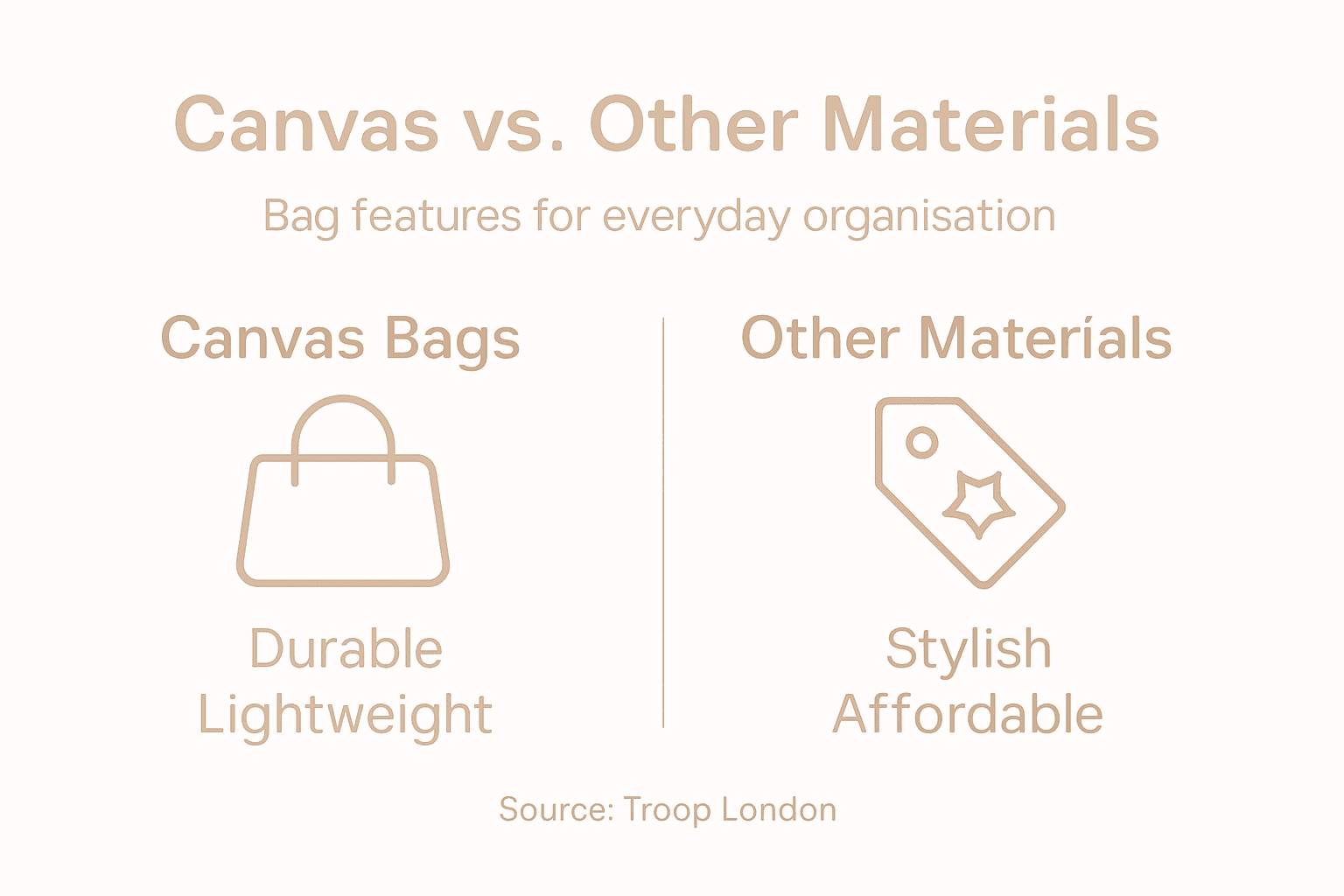
Leather demands more maintenance but projects professionalism and lasts decades. Synthetic materials offer affordability but often lack the longevity you want from a daily investment.
Think about what you value most: durability, style, sustainability, or cost. Your answer determines which features matter and which are distractions.
Pro tip: Create a checklist of your actual daily needs—items you carry, commute method, weather conditions—then prioritise features matching that list, ignoring everything else.
Transform Your Everyday Bag Organisation with Troop London
Struggling with finding the right system to organise your daily carry? The article highlights critical pain points such as wasted time, increased stress, and inefficiency caused by chaotic bag contents. Achieving true organisation means purposeful compartmentalisation, accessibility, and durability — concepts that Troop London embodies across its collections. Whether you need a messenger bag with multiple zones or a classic canvas backpack that adapts to your rhythm, choosing functional design crafted for real life can transform your day.

Discover how Troop London’s range of vintage-inspired, high-quality canvas bags blends style and practicality to create your personal ecosystem of organisation. Act now to regain control over your daily routine by exploring durable bags and accessories designed for seamless integration with your lifestyle. Visit Troop London today and start your journey towards a more organised, stress-free day. For useful tips on professional carry solutions, also see our bag organisation advice and learn why choosing the right style, like a classic canvas messenger bag, makes all the difference.
Frequently Asked Questions
How can I effectively organise my everyday bag?
Start by emptying your bag completely and categorising the items you carry into groups. Assign specific zones in your bag for each category, use smaller pouches to keep related items together, and ensure that frequently used essentials are easily accessible.
What are the key features to consider when choosing a bag for organisation?
Focus on compartmentalisation, weight distribution, material durability, accessibility of pockets, and overall comfort when carrying. Each feature should align with your daily needs and how you intend to use the bag.
Why is compartmentalisation important in bag organisation?
Compartmentalisation helps create dedicated spaces for different items, which enhances accessibility and efficiency. It prevents clutter and makes it easier to find what you’re looking for without rummaging through everything.
How often should I review and reorganise my bag contents?
It’s advisable to review your bag contents weekly to remove unnecessary items and ensure everything is in its designated place. A monthly audit can help maintain organisation and prevent clutter from building up.
Recommended
- 7 Messenger Bag Advantages Every Commuter Should Know – Troop London
- Why a Backpack is All You Need to Survive the Daily Grind – Troop London
- Unveil Bag Benefits: Secure & Stylish Essentials (2023 Guide) – Troop London
- The 7 Essential Bag Types for Men of Style and Culture – Troop London
- 7 avantages des bijoux faits main pour un achat éclairé - Australian Opal Direct